You’ve probably heard it from someone by now: “SEO is dead. It’s all AI now.”
It isn’t. But something real has changed.
For years, the goal was simple: rank on page one of Google. Today, a growing number of customers never see page one. They read an AI summary at the top of Google, or they ask ChatGPT, and they get a short answer that names just a few businesses.
Ranking still matters. But ranking and being recommended are no longer the same thing. That gap is the difference between traditional SEO and AI visibility.
In this guide, we’ll explain both in plain English, show exactly where they differ, where they overlap, and what a local business should actually do about it.
If you’re brand new to the idea, you may want to start with What Is an AI Visibility Checker? (And Why Local Businesses Need One in 2026).
What Is Traditional SEO?
Traditional SEO (search engine optimization) is the work of getting your website and Google Business Profile to rank higher in search results.
When it works, your business shows up near the top when someone searches “plumber near me,” either in the map pack or the list of links below it. The customer then compares options and clicks one.
Traditional SEO focuses on things like:
- Keywords on your website
- Backlinks from other sites
- Site speed and mobile friendliness
- Your Google Business Profile and map rankings
- Reviews and ratings
Success is measured in rankings, impressions, and clicks.
What Is AI Visibility?
AI visibility is how often, and how accurately, AI tools mention or recommend your business when customers ask questions related to what you do.
Instead of a list of links, the customer gets a written answer. That answer usually names a short list of businesses, and many customers simply call one of them.
The AI tools that matter most for local businesses today are ChatGPT, Google AI Overviews, and Google AI Mode.
Success is measured in mentions, recommendations, and accuracy: are you named, how often, and is what AI says about you correct?
The Key Differences at a Glance
| Traditional SEO | AI visibility | |
|---|---|---|
| The goal | Rank high in a list of results | Get named in the AI’s answer |
| What the customer sees | A map pack and 10 or more links | A short written answer, usually 1 to 3 businesses |
| Who decides | The customer compares and clicks | The AI chooses, the customer usually trusts it |
| Where it happens | Google search results | ChatGPT, Google AI Overviews, Google AI Mode |
| Biggest signals | Keywords, backlinks, site health, Google profile | Trusted mentions across the web, reviews, consistent info, clear content |
| How you measure it | Rankings, traffic, clicks | Mention rate, share of voice, accuracy |
| What losing looks like | You’re on page 2 | You’re not mentioned at all |
5 Differences That Matter for Local Businesses
1. Ranked vs. recommended
SEO puts you on the list. AI visibility gets you picked from it. With a search results page, a customer might still scroll and choose the third or fourth option. With an AI answer, there often is no third or fourth option.
2. Your website vs. the whole web
Traditional SEO centers on your website and Google profile. AI tools look much wider. They pull from review sites, directories, local articles, and “best of” lists, then decide who to recommend based on how consistently and positively you’re mentioned across all of them.
3. One search engine vs. several AI engines
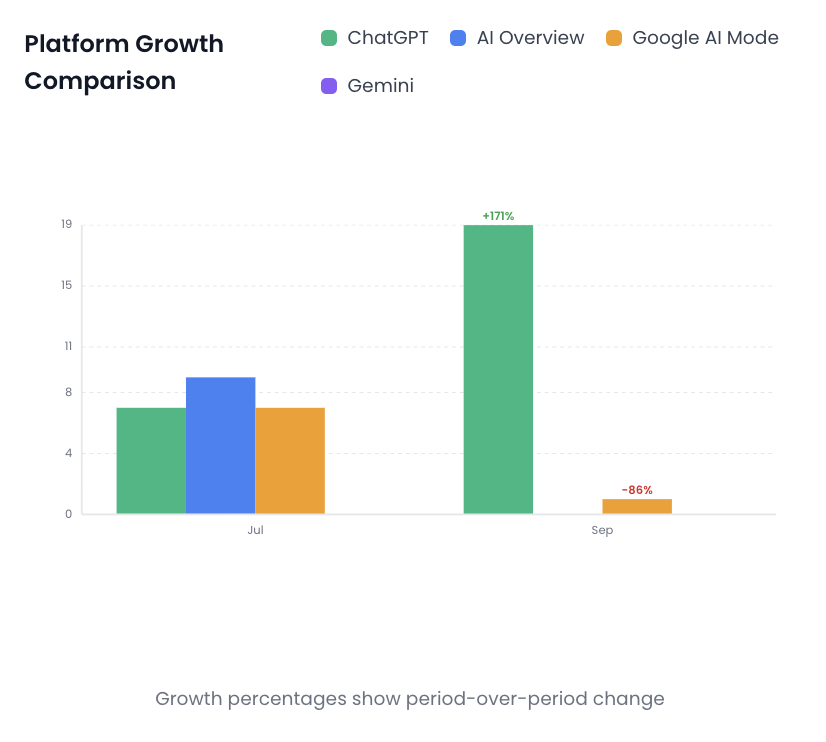
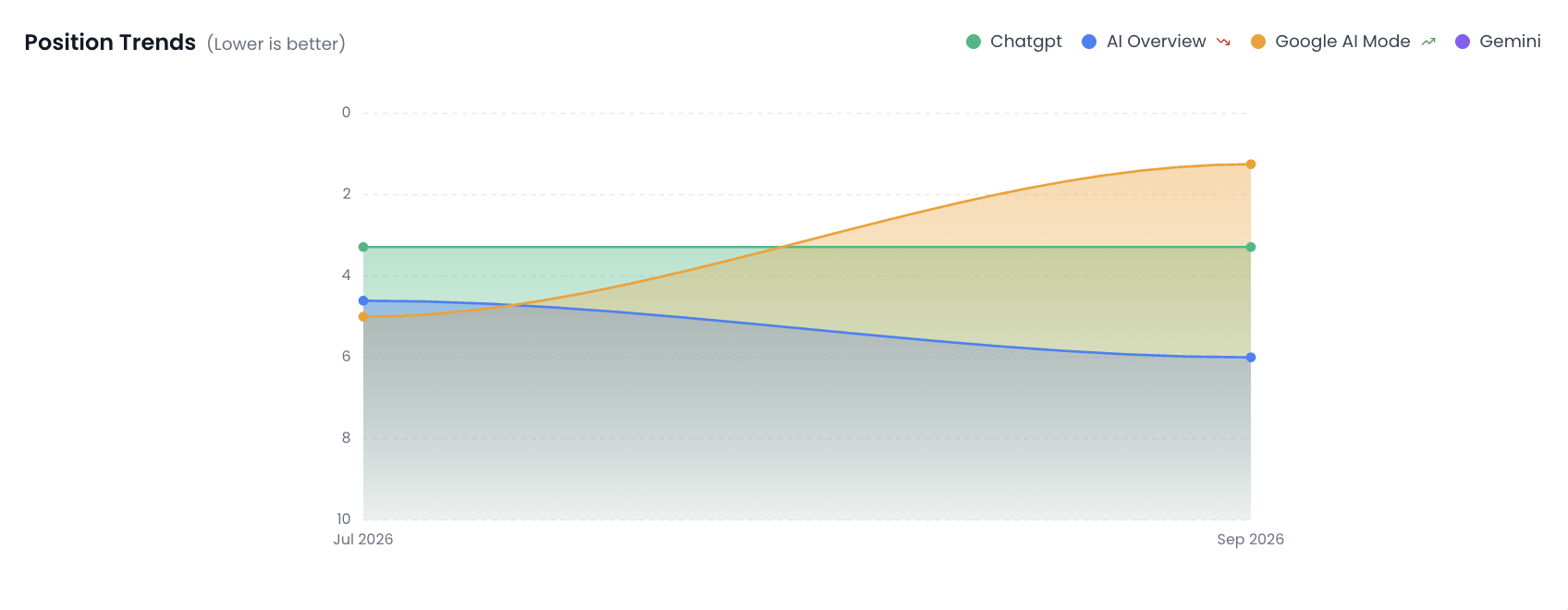
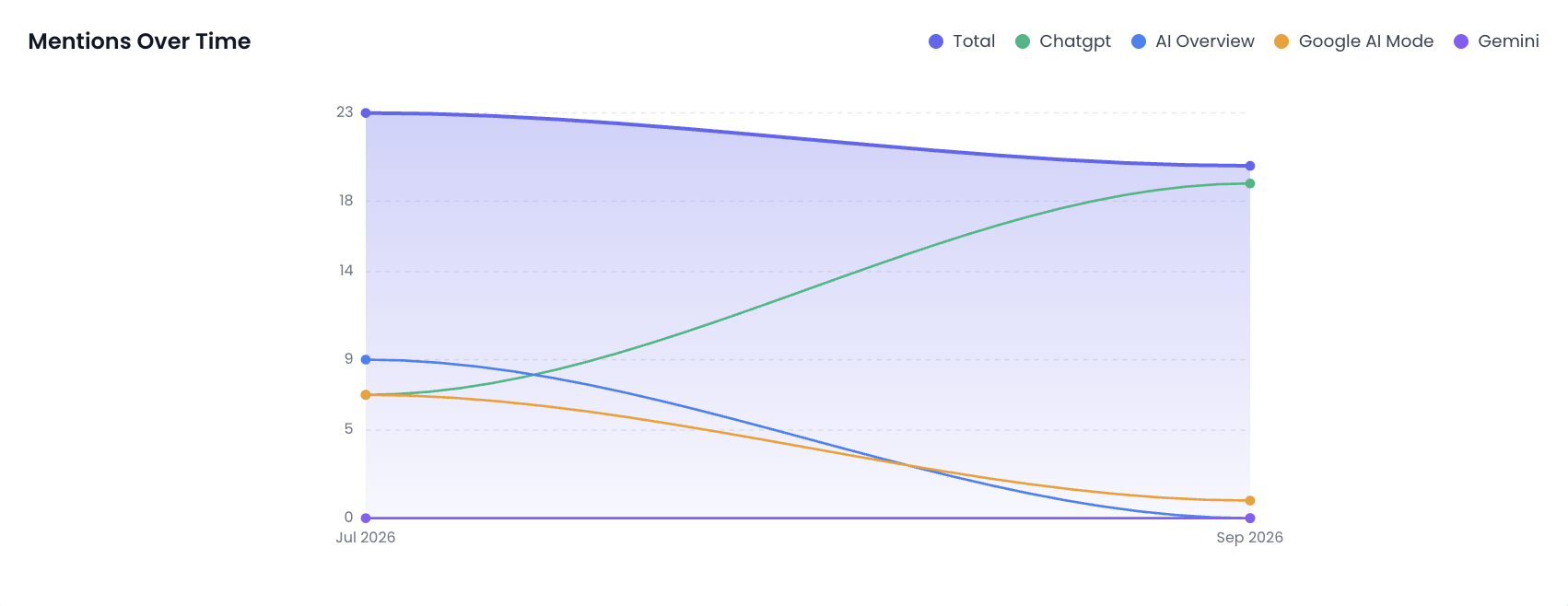
With SEO, “Google” was most of the story. With AI, there are several engines, and each one picks favorites differently. You can be the top pick in Google’s AI Overview and missing entirely from ChatGPT. We break down how each one works in Google AI Overviews vs. AI Mode vs. ChatGPT: Where Local Customers Actually Find You.
4. Keywords vs. real questions
SEO often targets short phrases like “cosmetic dentist Las Vegas.” AI customers ask full questions: “Which dentist in Summerlin is good with kids and open Saturdays?” Businesses with detailed, specific information on their site and profile have a big advantage.
5. Visible metrics vs. a blind spot
You can see your Google rankings in plenty of tools, including Google Search Console. But those tools generally won’t tell you what ChatGPT or Google’s AI says about you. Most businesses have no idea where they stand, which is why we put together a 5-minute guide to checking whether ChatGPT recommends your competitors.
Where They Overlap (and Why You Need Both)
Here’s the good news: AI visibility isn’t a replacement for SEO. It’s built on top of it.
AI tools often pull from the same sources that good SEO builds up. That means a lot of your SEO work does double duty:
| This SEO work… | …also helps AI visibility because |
|---|---|
| A complete, active Google Business Profile | Google’s AI features lean heavily on it for local answers |
| Steady, recent reviews | AI uses reviews to judge trust and quality |
| Clear service and location pages | AI needs specific details to answer specific questions |
| Consistent name, address, and phone everywhere | Mismatched info makes AI less confident about recommending you |
| Listings on trusted directories | These are common sources AI cites |
Where they split is in emphasis. SEO rewards your website’s strength. AI visibility rewards how well the whole web knows and trusts you. A business with a well-optimized website but few outside mentions might rank fine on Google and still get skipped by ChatGPT.
The bottom line: don’t stop doing SEO. Do it, then check whether it’s turning into AI recommendations.
How to Measure Each One
Traditional SEO: Use Google Search Console, your Google Business Profile insights, and a rank tracker to see your positions, impressions, and clicks.
AI visibility: You need a different kind of tool, because those dashboards don’t show what AI says about you. That’s what an AI visibility checker does. It runs real customer-style questions through AI engines and records who gets recommended.
See Your AI Visibility Next to Your SEO
Isla’s Free AI Visibility Checker shows you the part of search your SEO tools can’t. It checks ChatGPT, Google AI Overviews, and Google AI Mode, then shows you:
- Your AI Visibility Score
- Which competitors AI recommends instead of you
- The sources AI trusts in your market
- Whether AI has your business info right
- The top fixes to turn rankings into recommendations
Free, no credit card, results in about 2 minutes.
And when you’re ready to improve both, Isla handles the work that drives each one: Google Business Profile posts and review replies, AI-ready service and location pages, rank tracking and heat maps, and reporting that connects it all to real calls and bookings.
Frequently Asked Questions
Is SEO dead because of AI?
No. AI tools often rely on the same sources that SEO builds, like your Google Business Profile, reviews, and website. SEO is still the foundation. AI visibility is about making sure that foundation turns into recommendations.
What’s the difference between AI visibility and SEO in one sentence?
SEO helps you rank in a list of search results. AI visibility helps you get named in the AI’s answer.
Can I rank #1 on Google and still be invisible in AI search?
Yes. AI tools, especially ChatGPT, look beyond your website and Google ranking to how widely and consistently you’re mentioned across the web. See how each engine differs in AI Overviews vs. AI Mode vs. ChatGPT.
Is AI visibility the same as GEO or AEO?
They’re closely related. GEO (generative engine optimization) and AEO (answer engine optimization) are names for the work of improving how AI tools find and recommend you. AI visibility is the result you’re measuring.
How do I check my AI visibility?
You can test it by hand by asking ChatGPT and Google’s AI the questions your customers ask. For a full report across all three major engines, use Isla’s Free AI Visibility Checker.
The Bottom Line
Traditional SEO gets you ranked. AI visibility gets you recommended. Your customers are using both kinds of search, so your business needs both.
Keep doing the SEO basics. Then find out whether they’re actually landing you in the AI answers your customers read.
Your SEO tools show your rankings. Isla shows your recommendations. Get your free AI Visibility Report. It covers ChatGPT, Google AI Overviews, and Google AI Mode, and takes about 2 minutes.